I’ve been quiet posting, as it’s been one of those months where I felt like I had to choose between writing about magic or just… playing Magic. I honestly don’t see how content creators manage it at all. But I had a good coaching session with Ethan (of Lords of Limited) and he had some really interesting feedback on one of my drafts.
the draft

So let’s talk Westgate Regent, shall we? Despite sounding like a mid-range business hotel, it’s a powerhouse card the likes of which Sengir Vampire can only dream. It’s… pretty close to an Quadrant All-Star. It breaks board stalls, is reasonably priced, its Ward defense almost ensures a 2:1 if oppo has removal for it, and it snowballs ridiculously. And I was fortunate enough to open it.
Unfortunately black was extremely cut in my seat and I moved into a perfectly fine RW deck. Ethan pointed out that I gave up too early. The Regent is sufficiently game-breaking of a rare, in a format where sheer power level of cards pretty much determines everything, that it is worth fighting for. P1p5 there was a Feign Death and some other dorky-enough black cards that I could carve out enough black with those and (presumably) getting hooked up in pack two. Which is what absolutely could have happened.
This inspired me to use that nifty little tool on 17lands to develop a more formal pick list. But I simplify the bands to fit my drafting heuristic.
- Game Changes
- Power
- Draft Changers
- Signals
- Variable Playables
- Filler
- Avoid
game changers (Bombs)
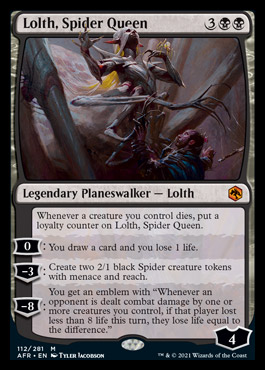
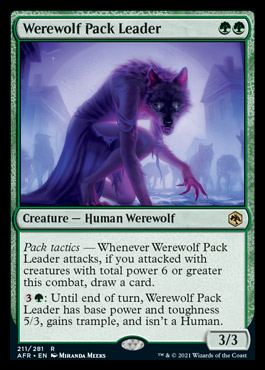
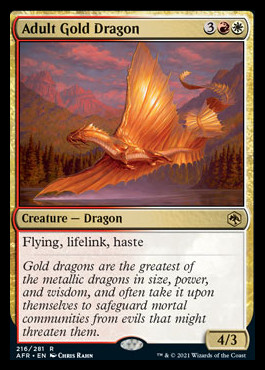
Game Changers are the cards that… change the game. Ideally they check two to three of these boxes
- Can catch you up from behind
- Extremely powerful/efficient
- A source of sustained advantage
- 2-for-1 card advantage
It’s hard to tick all of those boxes, but you get a good sampling above. If the Pack Leader didn’t have the draw-a-card condition, it would merely be extremely powerful. But the sustained advantage that provides in addition to the rate makes it top shelf in my book. Similar with the gold dragon: 4-power flying and lifelink is very good. But being hasty means it can dramatically swing a board state in your favor.
power
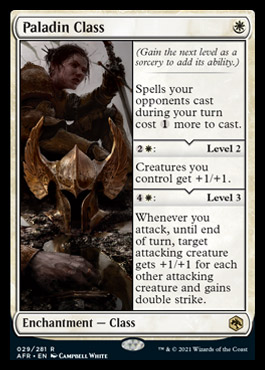
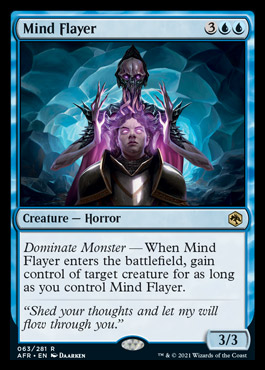
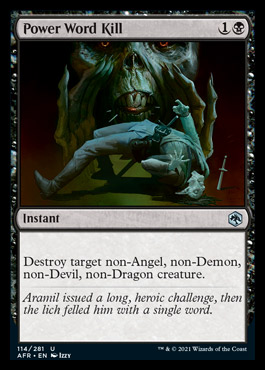
These are the classic “B” grades: they pull you into the color. Perhaps they are a great 2-for-1 (Mind flayer), snowball dangerously (Paladin Class), or efficient (Power Word Kill). Either way, you’re excited to open them and excited to draft them and excited to play them. What separates them from the Game Changers is that they aren’t *that* swingy and certainly don’t fulfill “multiple” categories. For example, Paladin Class is great as a parity breaker, but won’t do much to catch you up from behind. Think of them as ‘game tilters” rather than changers.
Draft Changers (aka “Build-around”)
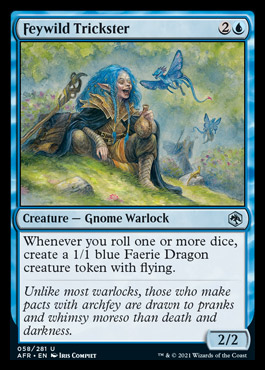
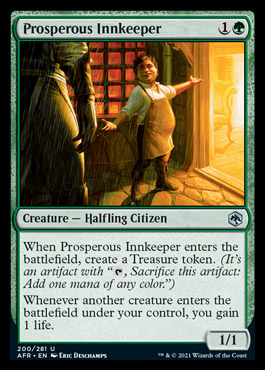
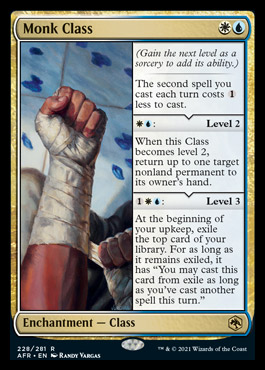
The “Draft Changers” are those that, if properly supported by other cards, can be extremely powerful. The way I like to think about the build-arounds is that they change the value of other cards. If you have a Prosperous Innkeeper, lifegain payoffs become a lot more valuable. Ditto for rolling dice with the Feywild Trickster (even if that deck didn’t really come together in AFR). Monk Class is a milder version of this. It is fine on power level true, but the combination of cheapening spells, a bounce, and ongoing card advantage does change how you would value aggressive tempo-ish cards.
signals (best commons)
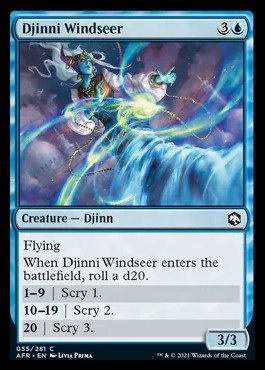
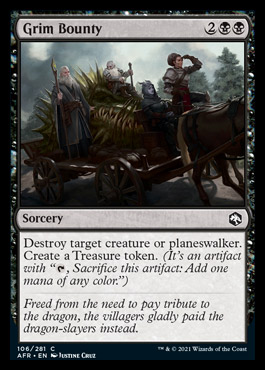
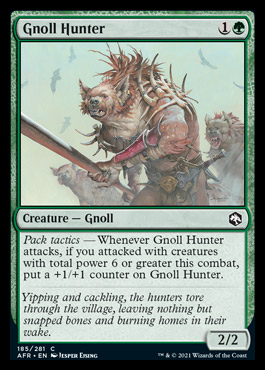
Finding the lane is one of the most important skills in magic, and the ‘best commons’ in a color are the most reliable signpost. Seeing one of these pick 5-7 is indeed a “signal” that said color is open/underdrafted. This is not to say that the signals are all the same power level, far from it. Just that you should check your lane.
variable playabes
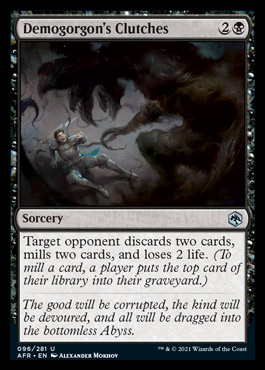
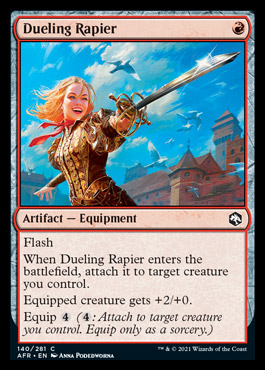
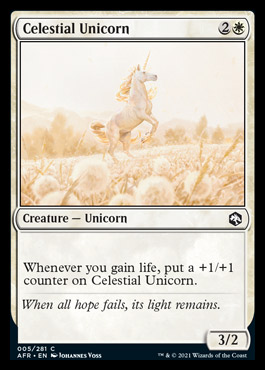
Here is where I deviate from just a light reskinning of LR/LoL grading system. The Variable playables are the JV of Build-Arounds. They can be stronger or weaker depending on the makeup of the other cards, but the potential ceiling isn’t so high that you’re changing your pick order like a true Build-Around. For example, Dueling Rapier is a C- card in any deck with mountains. But if you have some equipment payoffs (Armory Veteran, Dwarfhold Champion etc.) it probably climbs to a C, maybe C+.
filler
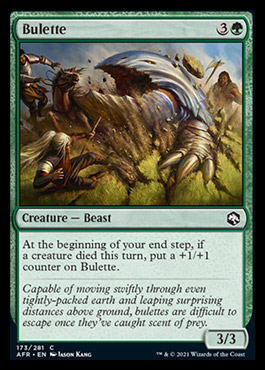
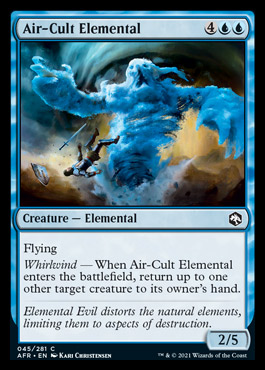
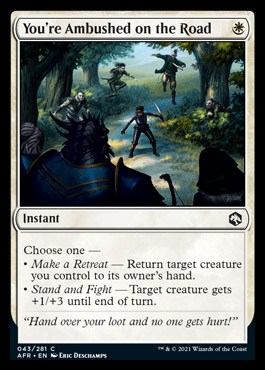
These are cards that will play, but they don’t really “have a home” and you’re not excited to sleeve them up in the 40. What separates them from the “Variable Playable” is the lack of a deck that wants them.
actively avoid
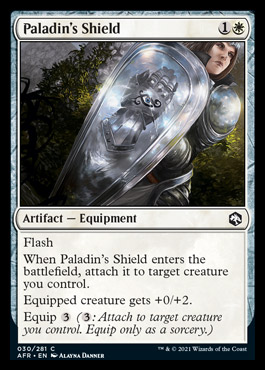
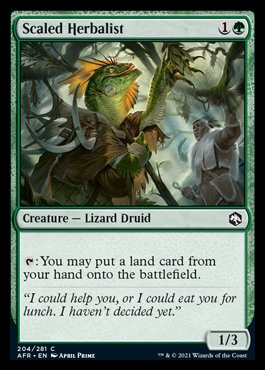
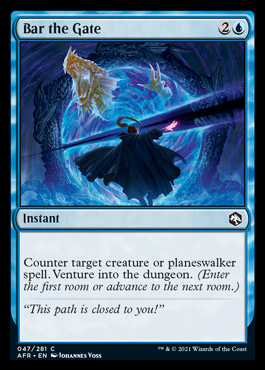
These aren’t necessarily the stone-cold Fs–but generally speaking–if you never put these cards in your deck, that’s probably the right choice. This can be harsh: Bar the Gate is a playable Magic card! There are other sets where a 3-mana counterspell with some upside could totally be played. But not in this set, not today.
So, in the waning days of AFR, I got around to setting the ratings. What do you think? Anything look in the wrong spot?
 Benalish Dad
first off: banger of a title
second: the lol boys just came hard at “data”, haven’t finished listening yet, but i get the feeling they aren’t against “data” but rather are against “humans”, more to come on that point
dawnbringer cleric p1p2? talk to me. i would have been in a different direction. did ethan have a note on that pick?
LikeLike
Humans vs. Data! The eternal grudge!
Yeah, the p1p2 cleric confuses me too in hindsight. Should have 100% been cleric class.
LikeLike