Several months ago my father pushed a book into my hands. Untangled: Guiding Teenage Girls Through the Seven Transitions into Adulthood. I carefully explained to him that Lil’ Chandra isn’t even in preschool yet. With a haunted look in his eyes (I have a younger sister), he carefully enunciated, “You cannot begin to prepare too early.” So it sounds like I have *that* to look forward to.
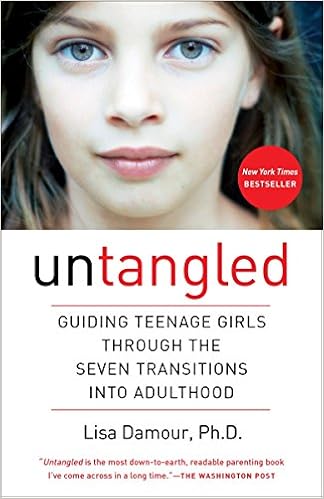
But the good news is that the read was both highly entertaining and pretty interesting. The author is a therapist at an all-girls school, so she interwove stories (some highly amusing) with the academic literature. The basic conceit comes from Anna Freud, that teenage girls transition into adulthood along seven dimensions: ending childhood, finding a new tribe, harnessing emotions, contending with adult authority, forward planning, romance, and self-care. Any given young woman might be at different developmental stages among the strands, it’s not like they move in lockstep.
Two of my favorite insights came near the beginning, the end of childhood. It is inevitable (and indeed healthy) for your adorable child to no longer be your fun little buddy and break off on their own. The author used a good pool metaphor: it’s fun to dive in and splash and play around. But you get tired, want to rest on the edge of the pool before pushing off again. Our job as parents is to be that safe edge of the pool, help them catch their breath, and then off they go. She shared a great story of a daughter on her high school graduation taking out her yearbook and going through it with her mom. She was sharing all of these stories and jokes that the mom had never heard. Then the teenager went to go get changed for a graduation party. The mom stayed on the couch for a good twenty minutes, basking in the afterglow of this amazing moment with her daughter, before she realized that her daughter peaced out and left without her! Resting on the edge, and then pushing off!
A couple other of good insights to keep in mind. First, it’s a very common manipulative tool to ‘outsource’ emotions. A teenager was embarrassed by a bad test score. So she casually dropped it on the kitchen table and left the house. The dad found it, started freaking out because ‘she used to be such a good student’ only to have her resolve it on her own 16 hours later. But the mechanic of “I’m upset; now you’re upset.” apparently is a common one to unload uncomfortable feelings. There was the insight that your daughter will constantly be bumping into incompetent adults in her life. There’s no room on her academic transcript to explain that Mr. Martin was an idiot who couldn’t teach pre-calc. She’s just going to figure out how to solve it herself.
Finally (and this was one of the rare gendered differences) there’s something called the ‘veil of obedience’. Boys (teenagers and–let’s be honest–adults) are pitifully obvious when they are tuning you out. Girls however are much savvier at giving you the answers you clearly want to hear, (“Of course there won’t be alcohol at this party.”) and then zipping off to do their own thing. As such, the author recommends not asking questions that basically beg them to lie to you, but rather ask ‘you’ questions. “Are you worried about what’s going to be at the party?” and such. What all teenagers crave more than anything is being treated like an adult and so seeking out their judgment is a good tool.
In short, I would recommend this book. While I think 10 years to ruminate on these lessons might be a bit of overkill, it’s certainly helpful to keep in mind that our goal is to raise an adult and that the clashes of teenager-dom is an important part of that process.
 Benalish Dad