Let’s discuss the gold cards here in Dominaria. Some of powerful, some are narrowly powerful (“build-around”), and some are efficient but not game breaking. The rarity of tools to splash I think highlights small differences between the gold cards. If one extreme is Khans of Tarkir, where you jam anything and everything that comes to mind, we are at the other in Dominaria. The format is slow enough where card quality really matters but sufficiently demanding where you can’t get too greedy with the splashes. I’ve created a framework of multi-color, roughly sorted by how strong and how hard you’ll work to make them fit.
The Bombs
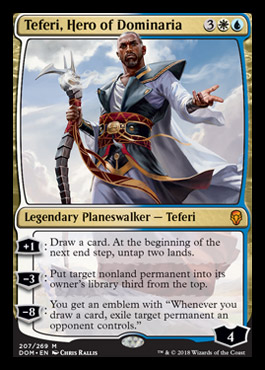
In a way, these are the easiest to spot. They are so powerful, so backbreaking, that you want to play them and you will do anything to play them. Take a Evolving Wild or Skittering Surveyor over removal? Yes please. Even if the colors get completely cut in your seat, you will fight for these colors and/or any splashing tool.
Quadrant: Losing
The Accelerators

These can be a subset of “Bombs”, but they perform in a slightly different way. Instead of just making your deck better, they make a good deck better. Tatyova is a perfect example of this. She is an incredible card-advantage engine, both prolonging the game (with the life gain) and digging through your deck. But if your deck fundamentally sucks (like when I squandered two of them…) it doesn’t actually do that much. You’re just drawing bad cards faster. I would still take these very highly of course, but it’s important to consider the difference when drafting (aka: have a way to win). A deck can do, “Holy cow, I have two Teferi’s. All I have to do is stay alive and draw them.” A deck can’t go, “I have two Tatyova’s. That’s all I need.”
The Splash
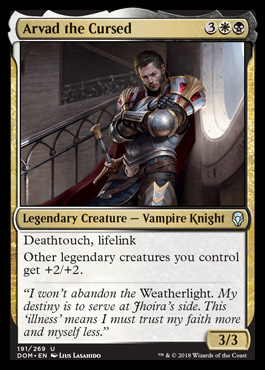
Dropping further in power level you have cards that you are happy to splash, but you’re not warping your deck around. The power level is strong, the casting cost is on the higher side (giving you time to find the splash) and the impact is solid, but you’ll get bumped off these colors without worrying about it too much. A good test is taking one of these early and then a few picks later having a choice between decent removal and a splash-enabler. With the Bombs, you take the splash-enabler without hesitation. Here the removal is probably more alluring.
Quadrant: Parity.
The Signal
(aka the Anti-Splash)

These are ‘build-around’ gold cards, at least B/B+ or more. They are GREAT in the dedicated deck that supports them, but they make for poor splashes. Partly due to needing other cards to be great (need all the wizards in blue/red) and partly because if you’re not casting them early, a lot of the power is squandered. This is the classic “4th pick signal”. Seeing one of these cards is a very strong signal that no one is in these colors and should be taken accordingly. To distinguish these from the Splash, weigh it against removal. If I have some pretty good red cards and I see a third pick Adeliz, I’m almost definitely taking her, even over really solid removal. So seeing a 4th-pick Adeliz is a strong signal that most of the players upstream are not red or blue.
The Payoff
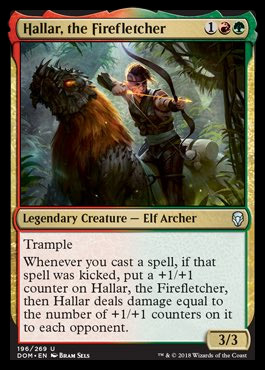
These cards are the “reward” for finding the underdrafted colors at the table. The casting cost is low, so they make unappealing splashes. The power level isn’t as high, so they don’t warp people into dropping everything and going for the UR dream with Adeliz. Ideally, you’re seeing these pretty late. It’s even conceivable that they would wheel. But you definitely want to be casting them on curve. A fair amount of the value of Hallar is in that he’s a three-mana 3/3. Casting that on turn six is a lot less impressive.
Quadrant theory: Developing.
Case Studies
Rona, Disciple of Gix
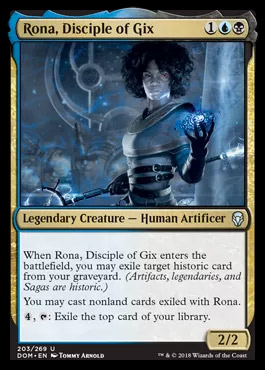
A three-mana multicolor card usually defaults to Payoff: it’s cheap and therefore wants to be cast early. However, I think Rona is much more of a traditional Splash because she is so good when the game is at parity. Despite the cheap cost, her value goes up the later she is cast as there is a higher chance that she can get you back a historic spell. Her value-engine grind is great in parity quadrant so you really are quite happy casting her late (imagine if she was a 3UB 1/4, same text. Just as good, right?). I classify her as a Splash.
Jhoira, Weatherlight Captain

This makes for an interesting contrast to Tatyova. They both draw you cards, which is classic Accelerator. But Tatyova has 16+ hits in any deck, whereas Jhoira will be lucky to have 5 (unless you’re throwing in crappy cards). Jhoira isn’t a particularly great splash, as her raw power level is Hill Giant. If you don’t cast her on curve, you lose a bunch of opportunities to trigger her draw ability. Therefore I put her at Payoff, though one that’s unlikely to wheel as other drafters will be seduced by the mythic rarity (and her Constructed ceiling is *very* high)
Aryel, Knight of Windgrace

Aryel is a fantastic card that I’ve only had the misfortune to ever play against. Four-mana 4/4 vigilance is already slightly above rate. Add to that an ability to increase your board state, and now you’ve got a parity-breaker. Add to *that* a reusable removal ability and you’ve got a stone-cold bomb. Snap it up whenever you see it and fight for it. Again, a bit of a ‘duh’ but that’s what makes it a Bomb with a capital B.
 Benalish Dad
One thought on “A Golden Taxonomy”